
What's the problem?
Cancer treatment decisions depend on interpreting large volumes of complex information, including medical images, biological and molecular profiles, clinical records, treatment histories and patient outcomes. Even patients with similar diagnoses can experience very different disease trajectories, making it challenging to accurately predict prognosis and identify the most effective treatment strategy.
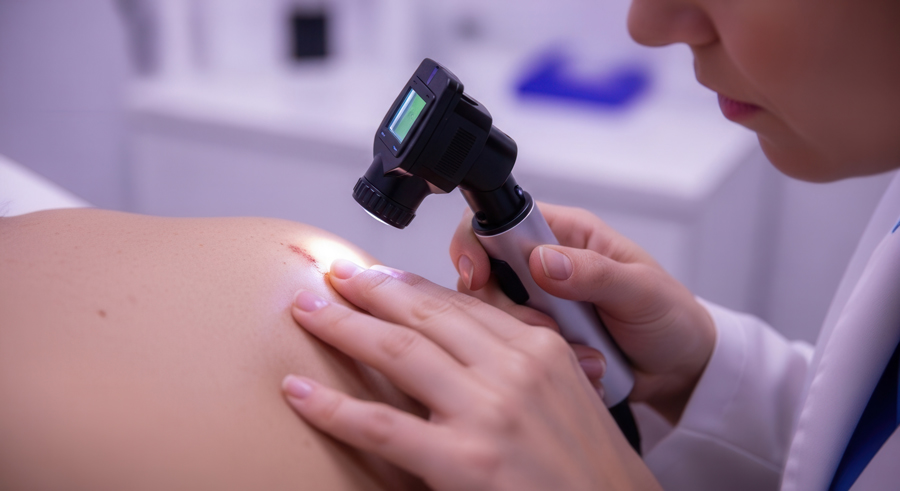
Researchers at The University of Queensland are investigating how artificial intelligence can help clinicians better understand tumour characteristics and support more personalised treatment decisions for patients with oesophageal cancer and melanoma.
What's UQ's innovation?
A multidisciplinary UQ team, led by Dr Lauren Auode is developing and benchmarking deep learning and agentic AI approaches using multimodal datasets from around 460 patients with oesophageal cancer and melanoma. The project integrates medical imaging, biological profiles and clinical documentation to develop next-generation decision support tools for precision oncology.
The team's first published AI agent, Agent-MIRA, demonstrates how AI can support clinical decision-making by retrieving phenotypically similar patient cases from medical imaging databases and presenting associated clinical information, including cancer type, treatment history and survival outcomes. The system also provides uncertainty estimates to help clinicians understand the confidence of its recommendations and links relevant clinical trial information through a single interface.
By bringing together diverse sources of patient data, the project aims to support improved risk stratification, prognosis assessment and personalised treatment planning.
What's the impact?
AI-powered decision support tools could help clinicians navigate increasingly complex cancer datasets and identify patterns that may not be apparent through conventional analysis alone. By combining information from imaging, biological and clinical sources, these systems have the potential to support more informed and evidence-based treatment decisions.
The research aims to advance precision medicine by supporting patient stratification, prognosis assessment and more personalised treatment recommendations. As these tools mature, they may also help streamline clinical workflows and accelerate the translation of complex multimodal data into actionable clinical insights.
Did you know?
The project combines multimodal data from around 460 patients with oesophageal cancer and melanoma, integrating medical imaging, biological information and clinical records to develop AI agents that support precision oncology and clinical decision-making.
Led by
UQ Project Team
| AI Research Strength | |
|---|---|
| Industry Portfolio | Health & Biomedical |
| Key Partners | Princess Alexandra Hospital |
| Key Publications | Vashistha R, Brosda S, Aoude LG, Ng J, Kundu P, Barbour AP, Vegh V. Agent-MIRA: AI-orchestrated medical imaging agent for PET image retrieval and assistance. Comput Med Imaging Graph. 2026 Mar;129:102725. doi: 10.1016/j.compmedimag.2026.102725. Epub 2026 Feb 9. PMID: 41690143. |
Published 15 September 2026