
What’s the problem?
As AI-generated images, videos and audio become more convincing, it is becoming increasingly difficult to tell what is real online. These technologies can be used in scams, misinformation campaigns, social engineering attacks and other forms of digital deception, creating risks for individuals, organisations and governments.
The challenge extends beyond detecting manipulated content. In an era of rapidly spreading information, people need ways to understand where content originated, how it has been altered and whether it can be trusted. Maintaining confidence in digital communications is becoming a major social, economic and security challenge.
What’s UQ’s innovation?
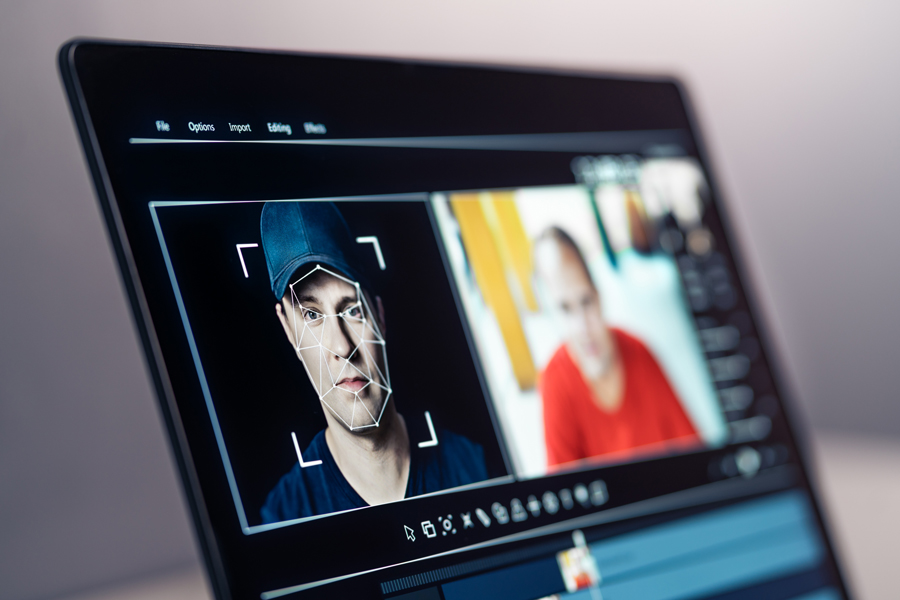
Researchers led by Dr Priyanka Singh, working with Professor Xue Li, Professor Ryan Ko and collaborators, are developing AI-enabled tools for media authentication and provenance analysis. The project aims to identify manipulated media, trace how content has been modified and provide evidence-based explanations that non-expert users can understand.
The research analyses the lifecycle of digital content, from its original creation through to modification and distribution across online platforms. By combining AI, digital forensics and provenance technologies, the team is developing approaches that help users better understand the authenticity and history of the content they encounter online.
The project also investigates methods for improving transparency and trust in AI-generated content, helping organisations and individuals make more informed decisions about what they view, share and rely upon.
What’s the impact?
Helping people determine whether digital content is genuine has important implications for cyber security, public trust and information integrity. The technology could support efforts to combat deepfakes, misinformation, online scams and emerging forms of AI-enabled deception.
The project is supported through Australia’s Economic Accelerator program, reflecting its potential to deliver practical benefits for individuals, organisations and government agencies.
The team’s work spans both the detection of manipulated content and the development of trusted provenance systems that help establish where digital content originates and how it has changed over time. Professor Ryan Ko’s research on content integrity via provenance-by-design examines how provenance can be embedded into digital ecosystems to strengthen authenticity, traceability and trust.
The growing importance of this work has been recognised internationally, with Professor Ko invited by INTERPOL to deliver specialist training on deepfake identification and prevention to law enforcement agencies in October 2026.
The research is also helping shape international conversations around trustworthy AI, misinformation, cyber security and digital trust. In 2026, Dr Priyanka Singh organised workshops at leading global research venues including CVPR (USA), DFRWS USA and ACM Multimedia (Brazil), covering topics such as misinformation detection, digital forensics, multimodal trust and AI-enabled persuasion.
Did you know?
Dr Priyanka Singh's expertise in digital forensics and deepfake detection was recently featured nationally in media coverage of AI-enabled romance scams, demonstrating how forensic analysis can reveal evidence of digital manipulation that may not be obvious to the public.
Led by
This work brings together researchers from UQ's Cyber Research Centre and School of Electrical Engineering and Computer Science (EECS) who are developing technologies to detect manipulated media, improve digital trust and combat AI-enabled deception.
UQ Research Team
| AI Research Strength | Human-Centred AI |
|---|---|
| Industry Portfolio | Defence, Cyber Security & National Security |
| Key Partners | Australia’s Economic Accelerator · UQ Cyber Research Centre · International research collaborators |
| Key Publications | Ko, R. (2026). Improving Content Integrity via Provenance by Design: An Overview of Current and Emerging Approaches. In Online Trust and Safety: Tools to Combat Online Harms, Misinformation and Malicious Content. CRC Press. DOI: 10.1201/9781003599913-3. SUPPORTING PUBLICATIONS [1] U. Thani, G. Singh, and P. Singh, “Unsupervised domain adaptation for audio deepfake detection with modular statistical transformations,” in Proceedings of the IEEE/CVF Conference on Computer Vision and Pattern Recognition Workshops, 2026, pp. 11031–11039. [2] S. Tariq, S. S. Woo, P. Singh, I. Irmalasari, S. Gupta, and D. Gupta, “From prediction to explanation: Multimodal, explainable, and interactive deepfake detection framework for non-expert users,” in Proceedings of the 33rd ACM International Conference on Multimedia, 2025, pp. 11716–11725. doi: 10.1145/3746027.3755786. |
| Supporting Link | https://about.uq.edu.au/experts/project/72373 |
Published 15 September 2026