
Using AI to tackle food waste from hospitals
What’s the problem?
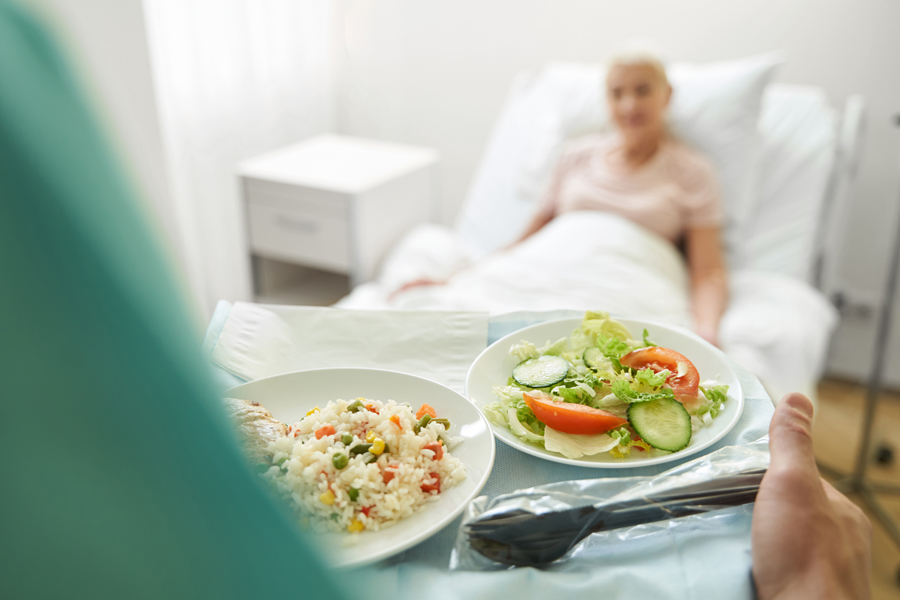
Food waste is a significant problem in Australian hospitals – up to half of all waste a hospital produces can be food. This wastes not just food, but also the money and labour of these facilities – and food waste produces greenhouse gases.
Yet this waste is rarely measured. Most food waste audits in hospitals are still done by hand and on an ad hoc basis, often relying on students during clinical placements, while aged care facilities rarely or never audit their food waste. Without consistent measurement, it is hard to know what is being left behind and why patients are leaving it – making it challenging to tackle the issue.
What’s UQ’s innovation?
A UQ team, led by Dr Nathan Cook from the School of Human Movement and Nutrition Sciences, is piloting AI technology designed to measure food waste automatically: AI-enabled tools photograph food waste and automatically identify the food type while estimating weight and volume, generating detailed audit data without manual sorting or measurement. This technology can produce the detailed, consistent data that has been missing from most hospital foodservices – without adding to the workload of kitchen staff.
The team’s goal is to provide data-driven evidence that allows these facilities to enact targeted changes – such as flexible portion sizes, menu changes or adjusted forecasting – then measure again to determine whether those changes were effective.
What’s the impact?
The potential benefits reach well beyond the kitchen. Reducing food waste could cut costs, lower greenhouse gas emissions and help ensure meals that are prepared better meet patients’ and residents’ food preferences and nutrition needs.
Overseas, hospitals that acted on audit data have reported meaningful savings — including around $200,000 a year in food purchasing at one facility, with further savings in preparation and disposal. The team’s longer-term ambition is to help Australia meet its national target to halve food waste by 2030, starting with the step that makes everything else possible: reliable measurement.
Did you know?
Australia’s National Food Waste Roadmap ranks measuring food waste as the second-most effective of its 47 interventions, with the potential to avoid 2.69 million tonnes over a decade.
Led by
- Dr Nathan Cook
Lecturer, School of Human Movement and Nutrition Sciences, The University of Queensland
UQ Project Team
- Professor Sarah McNaughton
School of Human Movement and Nutrition Sciences
- Dr Olivia Wright
School of Human Movement and Nutrition Sciences
| AI Research Strength | Scalable & Sustainable AI Data-Centric AI |
|---|---|
| Industry Portfolio | Environment & Agrifood |
| Key Publication | Cook, N. (2026). Using smart-bins to measure food waste in hospital foodservices: opportunities for practice change. Journal of Foodservice Business Research, 1–27. |
| Supporting Link | news.uq.edu.au/2026-01-audits-needed-drive-healthcare-food-savings |
Published 15 September 2026