
What's the problem?
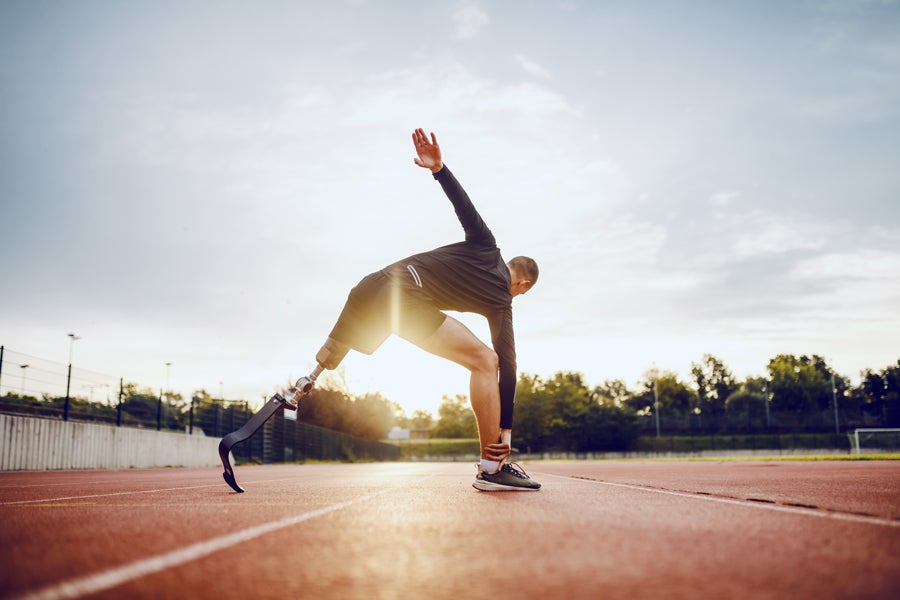
Para sport classification is essential for fair competition, but current methods rely on face-to-face assessments by highly trained experts. The process can be subjective, time-consuming and costly, creating barriers for athletes, particularly those in rural, remote and low- and middle-income countries. Limited access to classification can reduce participation opportunities and make it more difficult for athletes to compete at elite levels.
What's UQ's innovation?
In partnership with Follow Me AI (FOME.ai) and with the support of Queensland Department of the Environment, Tourism, Science and Innovation (DETSI) innovation funding, UQ is developing an AI-powered classification tool for Para sport. Using computer vision and smartphone video, the system analyses how athletes move and compares their movement patterns against high-quality biomechanical exemplars. The tool - accessed via a web-based platform - Kinelitics(TM) – can assess functional movement and support classification decisions in a more objective, consistent and accessible way.
Initially focused on Para athletics, the technology aims to enable athletes to complete assessments remotely using a smartphone, with results analysed through an AI-enabled platform. By combining expertise in sport science, biomechanics, artificial intelligence and Paralympic research, the project seeks to improve the accessibility, consistency and efficiency of classification.
What's the impact?
The technology could make Para sport classification more accessible, particularly for athletes who live far from specialist assessment centres. By reducing costs and improving consistency, it could help more people participate in Para sport and support fairer classification outcomes. The approach may also improve access to classification in low- and middle-income countries, creating more equitable pathways into competition. By making evidence-based classification more accessible and scalable, the project has the potential to support greater inclusion and participation across the global Para sport community.
Led by
- Professor Sean Tweedy
Chair in Physical Activity and Disability, School of Human Movement and Nutrition Sciences
UQ Project Team
Associate Professor Emma Beckman
School of Human Movement and Nutrition Sciences
Professor John Cairney
School of Human Movement and Nutrition Sciences
Professor Trevor Russell
School of Health and Rehabilitation Sciences
Associate Professor Xin Yu
School of Electrical Engineering and Computer Science
Dr Heming Du
School of Electrical Engineering and Computer Science
| AI Research Strength | Human-centred AI |
|---|---|
| Industry Portfolio | Social & Economic |
| Key Partners | Follow Me AI Pty Ltd (FOME.ai) |
| Key Publications | Mann, D. L., Tweedy, S. M., Jackson, R. C., & Vanlandewijck, Y. C. (2021). Classifying the evidence for evidence-based classification in Paralympic sport. Journal of Sports Sciences, 39(sup1), 1–6. https://doi.org/10.1080/02640414.2021.1955523 |
| Supporting Link | https://about.uq.edu.au/experts/project/66298 |
Published 15 September 2026