
What’s the problem?
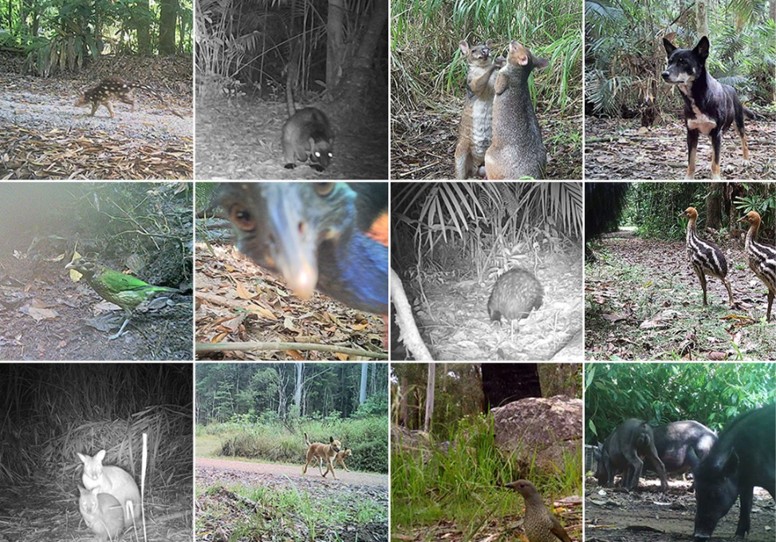
Across Australia, thousands of projects use motion-triggered cameras to monitor wildlife, generating millions of images and videos every year. But those data have long been fragmented across separate systems and formats, limiting its value for national-scale monitoring. Sorting images and identifying species manually is slow, creating a bottleneck between collection and the decisions the data could inform. With Australia facing a biodiversity crisis, researchers and land managers have struggled to turn this growing flood of imagery into timely, comparable insights.
What’s UQ’s innovation?
Developed by researchers at The University of Queensland and the Terrestrial Ecosystem Research Network, led by Dr. Zachary Amir & Associate Professor Matthew S. Luskin, the Wildlife Observatory of Australia (WildObs), is a national, cloud-based platform that brings scattered camera trap data into a single shared system. Its computer vision models are trained specifically on Australian species and environments and can identify hundreds of species around 10 times faster than manual review, with researchers kept in the loop to verify results and maintain data quality. Users upload their images, and WildObs stores, processes, and standardises them in the cloud, with results available for download and via interactive dashboards (login required). The platform hosts a range of AI classifiers — including Google’s SpeciesNet alongside, for example, models built for local conditions — so tools that were once difficult to share can be run by anyone, from research teams to citizen scientists.
What’s the impact?
By making camera-trap data faster to process and easier to compare, WildObs is designed to improve and accelerate conservation decisions across the country. The platform can help detect rare and elusive species, flag declines in native wildlife earlier, and show whether invasive-species management is working — while tracking biodiversity change across landscapes and, ultimately, the continent. Better use of these shared data could mean more effective protection of threatened species, smarter conservation investment, stronger environmental reporting, and closer national collaboration between the scientists, governments and environmental groups working on wildlife monitoring.
Led by
- Dr Zachary Amir & Associate Professor Matthew Luskin
School of the Environment & Terrestrial Ecosystem Research Network (TERN)
UQ Project Team
- Dr Renee Piccolo
School of the Environment - Dr Grant Linley
School of the Environment
| AI Research Strength | Environment & Agrifood |
|---|---|
| Industry Portfolio | Scalable & Sustainable AI |
| Key Partners | Terrestrial Ecosystem Research Network (TERN) Queensland Cyber Infrastructure Facility (QCIF) Digital Research Limited Australian Research Data Commons Bush Heritage Australia |
| Key Publications | Bruce, T.,. et al. (2025), Large-scale and long-term wildlife research and monitoring using camera traps: a continental synthesis. Biol Rev, 100: 530-555. |
| Supporting Link | wildobs.org.au |
Published 15 September 2026