
A University of Queensland team is building affordable, AI-powered classroom simulations where trainee teachers can practise teaching lifelike student avatars before they ever stand in front of a real class – a platform that could be adapted to any subject.
What's the problem?
Preparing education students to effectively teach writing is an ongoing challenge in teacher education. Studies in Australia and overseas show that pre-service teachers get few opportunities to observe or deliver writing instruction during their training. One of the most powerful techniques for teaching writing — the one-to-one “writing conference” — is also one of the hardest to do well, but trainee teachers rarely get to rehearse it. Many early-career teachers report feeling unprepared once they're in the job, which, in turn, affects the children they teach: national assessments point to a decline in the writing performance of Australian primary and secondary students.
What's UQ's innovation?
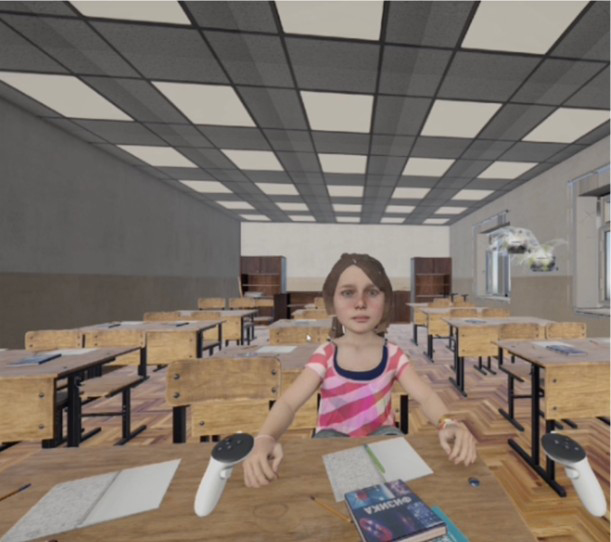
Researchers from UQ's School of Education and School of Electrical Engineering and Computer Science are building simulated classrooms where trainee teachers practise writing instruction with AI-powered student avatars. In a session, a pre-service teacher studies a real writing sample, works out what the student needs, and delivers instruction to the avatar before reflecting on how it went.
Earlier tools of this kind were expensive to license, and needed trained actors to voice each student live. UQ's approach uses AI models to drive what the avatars say and do, making sessions far cheaper to run and easy to tailor — educators can change the year level, the classroom set-up, and each avatar's learning needs, language or emotional state.
The team are conducting a series of pilot studies to test and refine the simulations, using what they learn to improve the AI's responsiveness and the teaching support built into each session. While this research focuses on writing instruction, the platform itself could be adapted to any subject area, from maths and science to the humanities.
What's the impact?
The project delivers realistic teaching practice in a way that is affordable and repeatable, giving UQ pre-service teachers the chance to rehearse demanding literacy skills before they step into a real classroom.
Longer term, the work is designed to build early evidence for a scalable, lower-cost model of practice-based teacher education, and to add to a growing body of research on using AI responsibly in education.
Did you know?
The same simulated student can be adjusted on the fly — a trainee teacher might work with a confident learner one moment and an anxious or struggling one the next, just by changing the avatar's learning needs, language or emotional state.
The team
This work brings together researchers from UQ's School of Education and School of Electrical Engineering and Computer Science (EECS).
UQ Research Team
- Dr Amy Rouse (Project lead)
School of Education - Associate Professor Nell Baghaei
School of EECS - Associate Professor Stephen Viller
School of EECS
| AI Research Strength | Human-Centred AI |
|---|---|
| Industry Portfolio | Social and economic |