
Artificial intelligence is becoming increasingly sophisticated, prompting debate about a question once confined to science fiction: could machines ever become conscious? A University of Queensland researcher is helping organisations prepare for that possibility by exploring how conscious AI, or AI perceived to be conscious, could reshape services industries and the way humans interact with technology.
What’s the problem?
Artificial intelligence is now woven through the services people use every day, from call centres to clinics, and the systems are becoming capable enough that some users find them almost lifelike. That revives a question usually left to philosophers and science-fiction writers: what would it actually mean if an AI system developed consciousness — or if enough people became convinced it had?
Most organisations are focused on how AI can improve efficiency or productivity, but there is little guidance on how to respond to conscious AI – the reality or the perception of it. What responsibilities might an organisation have if an AI system can experience wellbeing or distress? And what happens when human perceptions of AI do not match reality?
Without frameworks to address these questions, society risks being unprepared for the ethical, legal and operational challenges that many accompany future advances in AI.
What’s UQ’s innovation?
Associate Professor Christoph Breidbach and international colleagues have developed a framework to help organisations think systemically about a future in which advanced AI systems may be conscious, or may be simply perceived as conscious.
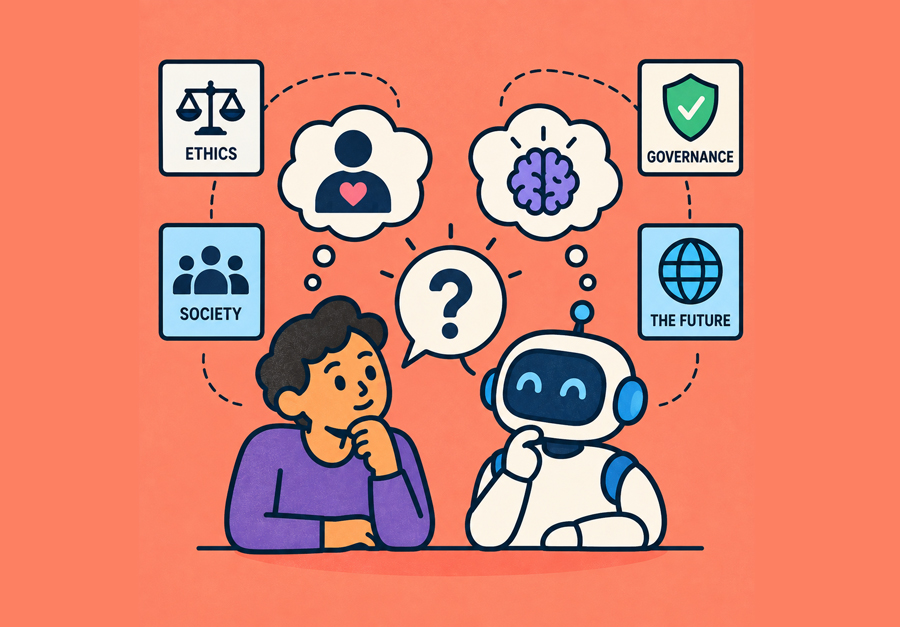
The research explores four possible futures based on two key questions: whether an AI system is conscious, and whether people believe it is. The framework shows that each combination creates different challenges and opportunities for organisations. For example, people may form emotional attachments to AI that is not actually conscious, or fail to recognise the interests of AI systems that are.
Using service settings such as healthcare to illustrate these possibilities, they examine how organisations can prepare for questions of trust, accountability, governance and wellbeing before they become urgent. It also identifies practical steps leaders can begin considering now, including staff training, governance frameworks and policies for the responsible development and use of advanced AI systems.
What’s the impact?
Organisations can begin to prepare for emerging AI technologies rather than reacting to them after the fact. By examining how conscious AI, and perceptions of conscious AI, could affect society, it helps decision-makers anticipate future risks and opportunities.
The framework also supports more responsible AI development by encouraging governments, businesses and service providers to consider ethical and governance questions early. In doing so, it contributes to global discussions about how society can harness the benefits of increasingly advanced AI while protecting human values and wellbeing.
Did you know?
A 2024 study found that two-thirds of people (67%) believe AI tools such as ChatGPT may have some degree of consciousness, despite most experts rejecting this notion.
Led by
- Associate Professor Christoph Breidbach
UQ Business School, The University of Queensland
| AI Research Strength | |
|---|---|
| Industry Portfolio | Social and Economic |
| Key Publications | Breidbach, C., Casper Ferm, L.-E., Maglio, P.P., Beverungen, D., Wirtz, J. & Twigg, A. (2026) Conscious artificial intelligence in service. Journal of Service Management 37(4), 597–621. |
Published 15 September 2026